Praxis
Praxis
Your Public, Private, and Secret Self
Use Left/Right to seek, Home/End to jump to start or end. Hold shift to jump forward or backward.
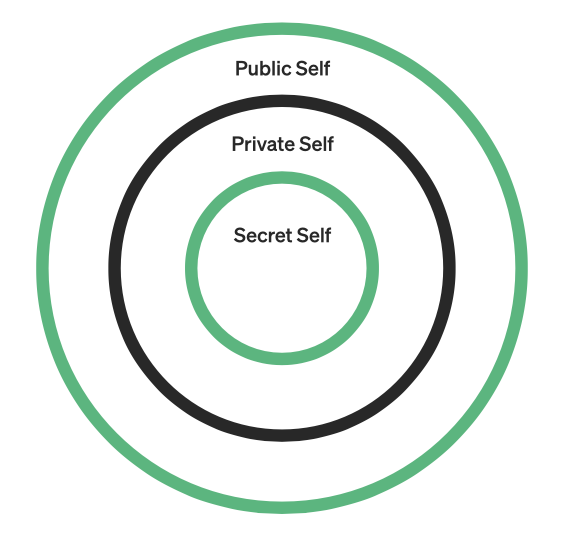
If you’ve ever felt the pressure to look “fine” while something inside you is unraveling, you already know the cost of living split. We’re in our authenticity series, and we walk through a surprisingly practical tool learned from The Leaders Journey: the Public, Private, and Secret Self, pictured as three concentric circles that help you name what you show, what leaks out at home, and what stays hidden in the dark.
View a visual of the Public, Private, and Secret Self
We define each circle with real-life examples, from social media curation to the way stress exposes what we try to manage. We also push on a common confusion: authenticity is not the same as transparency. You can be honest without dumping every detail, and you can set wise boundaries without slipping into performance. Along the way we talk about belonging, trust, and why jumping from “secret” straight to “public” can become its own kind of mask.
We get personal about what it looks like to bring the secret self into God’s presence first, then into safe relationships one step at a time, including why leaders are especially vulnerable when they have a large public platform and almost no private support. Mac also shares how recovery and limited capacity force a new kind of honest leadership that names weakness without shame.
Listen, then try the simple practices we give at the end: map your circles, notice the gaps, and share with someone you trust. If this helps you, subscribe, share it with a friend, and leave a review so more people can find the show.
Welcome And Why Authenticity Matters
JosiahWelcome to Praxis, a podcast where we explore how to practice and embody the way of Jesus in our everyday lives. Thanks so much for taking the time to listen. We're in a series on authenticity right now. And while authenticity is enjoying a moment in the cultural spotlight, its value is nothing new. It's deeply rooted in the biblical vision of being fully known and fully loved. As human beings created in the image of God, we are wired for relationship. We were made to know and to be known. And yet, so often we hide, we perform, and we manage impressions by burying our weaknesses. Slowly we begin living divided and inauthentic lives. And the truth is, real relationship is impossible while hiding. Genuine connection requires courage, the willingness to show up vulnerably and authentically. So in this series, we're exploring what authenticity is, what gets in the way of it, and what it takes to pursue it in our relationship with God, with ourselves, and others. Today we want to discuss a tool that's helpful in clarifying and promoting what it means to live with greater authenticity. So let's do it.
Concert Stories And Nostalgia
MacWell, welcome everyone. My name is Mac.
KatieI'm Katie.
MacI'm Josiah. So recently my middle son Keir comes into our kitchen and is like, hey, uh Pop Mac, which is my dad, invited me to go to a concert. We're like, well, what concert? He had no clue.
JosiahKieran didn't know.
MacNo, he didn't know. He's like, can I go? And we're like, Do you know what the concert is? He's like, no, but can I go? Would you want to go if you didn't know what the concert is did he just forget?
KatieOr your dad didn't tell him?
MacI have no idea. I think it might have been both. You know? Like, well, it might it probably is my dad didn't tell him, but it could have been he forgot. I it could have been either one.
SPEAKER_02I have no idea.
MacUm but it got me thinking, what's been your favorite concert?
unknownOh boy.
MacNow I'm just curious what the concert is. Yeah, now I want to probably concert if I know my dad. It's probably like some like Irish band or something like that. Like, you know, not not it's not a cool one. We'll put it that way.
KatieYeah. Well, I have quite the repertoire, is that the right word to draw from? I mean, my mind goes back to uh my first concert as a kid was Alanis Morissette. Nice Eagles Ballroom.
SPEAKER_00Yeah.
KatieI also saw Savage Garden for my eighth birthday par eighth grade birthday party at State Fair.
JosiahThat's cool.
KatieDo you remember Savage Garden? Yes.
JosiahOh yeah.
KatieCan you sing it?
JosiahWait, is that the I Wanna Stand With You on a Mountain? Yes.
KatieI want to stand with you. Yes, that one. Um, a lot of fun Summerfest ones. Like we used to always go see OAR for Summerfest, me and my high school friends and college. Yeah, OER. And um and then a lot of Dave Matthews band.
JosiahYeah.
KatieI'd probably put, I mean, I'd have to put Dave. Well, Alex, right.
JosiahAlex is a big Daver.
KatieWell, I was a big Daver before Alex. Um that was like high school, college. But yes, he was too.
MacJust do you remember the band Huba Stank? Oh yeah. Oh yeah.
JosiahDid you go to their concert? No.
MacBut Jody Bean, who, if you're listening and you've been part of our community for a long time, he used to be a pastor on staff and he sent me a little like meme this morning that said the H in Jesus H Christ stands for Huba Stank because he died for a reason, and the reason is you. Oh my gosh.
KatieThat's funny. Remember that song?
MacOh, I do remember.
KatieI remember my dad liking hubistink.
JosiahHuba stink. Yeah.
KatieWhat kind of name is that? It's ridiculous.
JosiahIt was perfect for the era, though, I think. Um no, well, as a kid, it was mostly Christian concerts going to LifeFest and stuff. Which some of those were still pretty cool. I do remember seeing it was uh we were camping at LifeFest.
KatieSo I was uh I was also at LifeFest, but in a hotel room. I probably waved to you on the campsite. Probably.
JosiahWe do we we tried one year camping um without a tent, and we just kind of had like sprawled out like a it was a bad idea.
MacMosquitoes?
JosiahUh no, it wasn't the mosquitoes. It rained. Oh and you didn't even bring a tent as a we had like a tarp and we kind of and the person next to us let us like put it in between our cars and kind of like prop it up.
SPEAKER_01Okay.
JosiahAnd it didn't really work. So bad idea. Anyway, there was one night where I I ventured out uh late at night and I didn't even know there were still concerts going on. And there was this one, if you remember, there was a one of the concert venues, they called it the pit, I think. But it was just like a pole shed barn on the end of the property.
SPEAKER_01Yeah.
JosiahAnd that's where they put all the stuff that was like risque or like would have been too harsh for the case.
KatieWas that the Christian Mosh Pit?
JosiahOh, yeah.
KatieOkay. Yeah, my dad spent a lot of time in there.
JosiahIt got crazy. I could see that. But I saw I saw a band that actually is much bigger now, although I don't know how popular they are now. But they did get big afterward, but didn't know who they were. And they were a band called August Burns Red.
KatieOh yeah.
JosiahAnd not as big as Huba Sting, but it is like hardcore Screamo, like really intense stuff. Um Christian. And I remember seeing them and I was like, August Burns Red had no clue what was gonna happen, just stood at at the back, and the first song came on, and it's just and I'm like, what? But it's actually really cool. And they were pretty talented, and it was kind of fun to see them when I had no clue who they were, and then they ended up getting really big after it.
KatieI would like to have a survey in our podcast show notes. Have you ever listened to Christian Screamo? Yes or no?
MacUh for our listeners, Adam on staff. Didn't he well wasn't he in a band where he was uh it's just a hidden talent.
JosiahIt was it was a hidden talent. Okay. When we would jam out, Adam could Adam did uh Adam could do like a scream out scream pretty well.
MacThat's amazing.
KatieIn like high school you were talking about. Yeah. Long time ago.
MacYeah, Adam's also very good at rapping. So if you ever see him in the foyer and just ask him to rap for you, I'm sure. While screaming. Yeah. What about you, Mac? Oh, by far the best concert that I've been to. I was in college at the time, and my friend Ben got tickets to Johnny Lang, and it was like sort of a stripped-down uh because he's like a blues artist. He is from Minnesota, was like a sensation at 16 years old. And then later on, he he actually came to Faith, and this was like his album after that. And so it was kind of like this acoustic set, and I just remember being like we had really good seats and just being like wowed by the talent. It was it was pretty incredible.
KatieThat's fun.
JosiahHe is talented.
KatieBeing in a good concert is fun.
JosiahYeah. Okay, one more quick. Yes. Um, as an adult, though, I will say. I I always used to make fun of people uh who would travel around and get really excited about legacy acts. So like acts that were once big, but they're still touring, even though they don't make new music.
MacLike Huba Stink.
JosiahHuba Stink, maybe. I don't know. Maybe they're still around. I have no idea.
SPEAKER_01Oh, I know where you're going with this.
JosiahI used to make fun of people until I was at Country Thunder.
SPEAKER_01Nickelback.
JosiahI got to go for with my wife for a work thing. And I couldn't bel I was like, why is Nickelback headlining Country Thunder? And I will say that I wasn't excited about it. And then when it started, there's just something about knowing every single song, throwbacks to like the nostalgic feeling of like, you know, not I'm out.
MacThat's a hard path for me.
KatieI get it. Hey, I went to a I went to a fray concert uh a couple months ago. It was great. Awesome. It was so fun. I went with Brittany Knutson, who's on staff, and we were jamming out.
JosiahThere's just something about like But the fray is more tolerable than nickelback. Oh no, nickelback's great.
KatieI'm glad to hear you say that. But I still think I think you got a t-shirt, didn't you?
JosiahI did.
KatieYeah, you should wear it.
JosiahI'll wear it.
KatieDefinitely wear it.
JosiahLike like nickelback. I would love to go to a Creed concert. I think that'd be so fun.
MacJosiah. Like I have so much respect for you, but the more you keep talking, the more it's dwindling.
KatieI would actually go to Creed with you.
JosiahI know what fe but I think part of part of it is it it feels ironic that that you're enjoying it. You know what I mean? Because you're like, oh, we used to love to make fun of this. But now it's like, yeah, but we know this stuff and it it feels good and everybody's singing and it's nostalgic.
KatieYeah. Yeah.
JosiahIt's a good vibe.
KatieI get it.
JosiahYou're a dad. Yeah. Yep.
KatieYeah, middle-aged dad.
JosiahWell, they they call it divorced dad rock.
unknownWhat?
JosiahYeah. It's like another name for the genre.
KatieOh, funny.
MacOh, interesting. All these things are connecting. Well, speaking of divorced dad rock, Kuba Stanks, and Nickelback.
KatieChristian Scrimo.
MacYes. And Olive Adam's hidden talents. Or sob rock is another way to put it.
KatieOh, that was fun. Um, all right.
The Authenticity Series So Far
KatieWe're on in a series right now on authenticity, and so far we've covered a fair amount of ground. Uh, we've first started out by talking about what authenticity is and what it isn't. We've talked about how it's essential to our relationship with God, ourselves, and others, and we've talked about how Jesus valued it and lived into it. We also talked about what gets in the way of it. That was the episode where we talked about this thing called the false self. The false self is essentially an inauthentic version of ourselves that we tend to present to the world. And then in our last episode, we talked about first formation. The idea that the false self begins to take shape at a very young age as we have experiences that shape us and form us. And then we respond to that by changing how we think and act as a way of protecting ourselves. So this is the idea that the false self begins in childhood. But our goal with understanding all of this is to be able to name what gets in the way of authenticity so that we can experience healing and begin to fully live into our new identity in Christ.
MacYeah.
Introducing Public Private Secret Self
MacAnd today we want to talk through a tool that really helps us avoid inauthenticity, but also pursue authenticity with God, ourselves, and others with greater integrity and alignment. I want to give a shout out to the Leaders Journey because this is a tool that I learned while working with them. And they've just developed some awesome tools to help in this conversation. It's called the public, private, and secret self. And we'll put a diagram of this in our show notes so you can actually see the visual. But for now, use your imagination and just imagine three concentric circles. And these circles represent different layers of our lives. Uh the outside circle, the biggest one, is your public self. Then imagine underneath that layer is the private self. And then deep inside that, the smallest circle is the secret self. And so what we want to do is just take a moment and fill out each one of these for you. And then we'll talk about kind of how they uh work together to help us live an integrated and authentic life.
Public Self And Image Control
JosiahYeah. So the so the first one we want to talk about is the public self. So remember, Mac mentioned the circle inside the circle, inside the circle. The outside circle is your public self. This is the part of you that most people are going to interact with. It's the part that everyone gets to see. Uh there's this is the the the parts of who you are that are open to observation. Um the it's the part of you that most people are going to interact with in most social circles.
MacYeah, and I would imagine it's probably the part, it's the part of our lives where we're most intentional, intentional about projecting a certain image and sort of managing how we want other people to see us. Um at the Leader Journey, we have an article that we hand out to clients and church staffs that we're working with that describes these three. And here's what Jim and Trisha say about the public self. Your public self is that person who is on display when you are at work and in social settings, and even when you're on a spiritual or leadership retreat. So remember the religious false self. It even shows up in sort of religious settings. The public self is the set of behaviors we learn to do that allow us to mingle with people in a way that increases the likelihood that others will think we're okay enough and not reject us. Some of this public self may be who you really are in your true self. So some of it might be legitimate, and some may be a mask you put on in public. Regardless, the public self is a way that you have learned to be in the world to manage, manipulate, and control the world to get what you want and need and to keep yourself safe. Right? So I think immediately of like maybe like social media. I think most people know this that like when you're on Facebook or Instagram or whatever and you see everybody's posts, like that is a bit it's a very public format. Anyone can see it depending on your privacy settings, and you're very much selecting what you share with the world based on how you want people to perceive you, right? And we do this with all sorts of areas in our life, right? There's this mixture of hiding and hustling, protecting and performing. And think about it, like you have a public self with regard to how you present your marriage. You have a public self with how you present yourself as a parent or at work or whatever. There's like these different different facets of our life, and they take on a public persona that we're projecting onto other people based on how we want them to see us and in order to get our needs met.
unknownYeah.
KatieYeah. And I like the part you said about keeping ourselves safe because that ties back to that first formation episode we did last time where it's like the stuff started in childhood where we learned, oh, in order to protect myself from this, that, or the other thing, I have to present the I have to present this way. It's a way of finding like belonging or safety.
unknownYeah.
MacAnd I like that they pointed out, and it doesn't mean that all of it's inauthentic. There are some authentic, hopefully, there is a fair amount of authenticity that shows up in your public self. But it's just a note that that probably isn't entirely the case. If you're sitting here going, Oh yeah, my my public self is entirely authentic, it might be time to like hit pause and maybe spend a half an hour reflecting, and then you can either that or you should be doing this podcast.
unknownYeah.
JosiahYeah. Yeah. I I think in this realm, the reality is you get to choose which parts of yourself you're gonna disclose. And I think there's a there is healthy wisdom in that, right? Like um knowing a proper context um for for how much transparency you're gonna have with with with someone can be healthy. But um I it sounds like you're naming that this this public self is a br can be can be a breeding ground for inauthenticity because um this part of you is you can be used to curate an image of someone you're not.
MacYes. Right? That's right.
JosiahAnd you use it to try to keep yourself safe and and protected from people knowing the real you.
MacAnd the the the chances of that are fairly high because in our public self, the people we're interacting with simply don't have access to us with the same degree of frequency that these other spaces do. And so it's easier for us to uh kind of be on our best behavior, so to speak, and and not disclose those parts uh about our lives or ourselves that we don't want them to see.
SPEAKER_00Yeah.
MacSo there's an access gap that also increases the chance of us uh projecting a certain image and hiding parts we don't want people to see.
KatieYeah. Makes sense.
Private Self And Involuntary Leaks
KatieSo the second part that we named is the private self. And the private self is essentially what your close friends, family, or trusted people see. So who you are like at home or with like intimate friends or family. Um, an example that kind of comes to mind of this is like I I'm sure we've all had a situation where you're driving somewhere and in the car you like get in an argument and then you show up like at church or wherever you're going, and it's like, Hey, how are you? We're fine, everything's good, right? It's like that idea of who are the people in the car? Like who are the people who really see you? Where and it's not always bad. It's not always like, oh, you're a monster at home in a different way in public. That's what you know, we're gonna talk about today. But it's just who how do you show up with the people that are closest to you and in those most intimate relationships?
MacThat's right. Um, Jim and Tristan say your private self is that person that gets revealed in your home with your family behind closed doors. Perhaps your closest friends see it. It's the person you become when things get really stressful, when you don't get your way, when someone does something that bumps you and you experience defensiveness. Um, and so one of the things that happens with the private self that is very different than the public self is that the law of involuntary self-disclosure takes over. So, again, going back to the public self, we can sort of manage how we're showing up in that space, hiding certain parts that we don't want people to see, all to sort of secure our needs and be likable. But in the private self, um, and in that space, when you have more contact with people on a regular basis, it's just too hard to manage or maintain that degree of control. And inevitably what happens is stress acts on you, anxiety shows up, and who you really are takes over. Right. And so people in the private space get a level of self-disclosure. Um, you disclose who you are based on the circumstances of life without always having volition or control over that. It's just involuntary, it sort of takes over, right? Mm-hmm.
JosiahYeah. I like to think of the I'm thinking of an example of like if you have a if you have a spouse and you're at a social gathering and you know, and you you're gonna feel an obligation for for the most part, most people feel an obligation to like be smiling and interact with it with a lot of people, even if you don't necessarily like want to, right? You're gonna feel an obligation to keep up within the party or something like that. But um it's like uh the the private self or the the private self is the conversations you have when you get back to the car and you're like, oh and you kind of let it down for a second. Um, and you maybe you complain a little bit about this, or you're like, oh, I really had a great conversation with this person. You're kind of sharing more of how you were thinking and feeling in the moment with your spouse in the car on the way home compared to what you were exposing to everybody else.
MacYeah. Yeah. Another example that I think about is like um one of my boys will often say, I don't argue with people at school like I do with you at home. And I'm like, well, that's because it's a different space. Aaron Powell I've had that same conversation with my eldest. That's because it's a different space. And um it seems like kind of a harder thing for him to grasp, but I'm like, just think about it. If something annoys you here, you just sort of erupt. If something annoys you at school, there's all this social pressure for you not to do that.
SPEAKER_00Yeah.
MacThat to me captures the difference between, you know, your public self and then your private self.
KatieYeah, and I like the word involuntary that you used because a lot of it sometimes does feel involuntary, you know? Sometimes it's like you spend enough time with someone and stuff leaks out and you're like, oh shoot, I didn't realize that I was acting that way. I didn't feel like I was as intentional as I wanted to be in that moment.
JosiahYeah. Yeah. That's right. And the people close to you, sometimes closest to you, will often see things about you reading your body language before you even are aware of it.
SPEAKER_02Right.
JosiahSo, like even if you're trying to hide it, often the people that are close to you are gonna be able to see what's actually going on.
MacYeah. So there's a lot of involuntary self-disclosure that occurs in the private space that can conflict with your public self, how you're presenting yourself more
Secret Self Shame Sin Dreams
Macbroadly. And then the third circle, the smallest one, is your secret self. And here's what Jim and Trisha say about the secret self. They say your secret self is the one that only you know. It's a self-talk you do when you mess up, but no one else hears. The secret self is the things you do and the feelings you feel that no one knows about. It's the judgments you experience but don't express, or the feelings that recur, but you work hard not to expose. In the secret self also resides the painful things that have happened to you that you never told anyone. It's a time when you were violated, or it is a sin you never confessed. It's the most secret part of who you are. And sometimes those things have been become forgotten. Finally, sometimes the secret self contains our deepest dreams and hopes for our lives. Somewhere along the way, we got the message that we were not good enough to achieve those dreams, so we tuck them away in our secret self. So, end quote. So the secret self encompasses the places in our lives that we put on fig leaves, right? They're the places we cover up and work hard not to let other people see. And what I like about this quote is that it covers a variety of things. So, first of all, it's your it's like your inner critic. I think we all have one of those. Um, those harsh words about how you're doing and showing up in everyday life. Um, it might involve feelings that you're not willing to talk to other people about or share with others, uh, painful things that have happened to you. Um it could be a sin or some area of sin in your life that you haven't disclosed to anybody else. Uh, you may have. Forgotten certain parts of your secret self. But I also like that they name it can be positive parts about you, your hopes and dreams that you're too scared to share with someone else. It's not your secret self is not all negative. It could be something you sense God inviting you to do that feels really scary, but also good, and you're hesitant to share because the moment you share it, then you have to kind of chase after it. Right. So it's not all bad. It can also be, it can also be good.
JosiahYeah, I think that's what what we we would name as what discipleship is that the secret self, being able to align that more with who we were created to be. So it's not all bad, but but the worst, more sinister parts of how we really believe bad news about ourselves is going to exist in its core in our secret self.
MacYeah, it goes back to the garden in Genesis 3, where Adam and Eve all of a sudden wake up and experience shame, and their knee-jerk reaction is to sew fig leaves on and hide from God at one another and probably themselves. That secrecy, that hiding is what gives way to the secret self. Right? That's what it looks like.
Integration With Boundaries And Belonging
JosiahAll right. So now that we've identified what the public, the private, and the secret self are, I think there's two big items to note. Um there's there's there's things that we want to make sure we have categories for before we go any further. The first is that identifying these does not have the goal of trying to eliminate any one of them, right? So we're always going to have a public, a private, and a secret self, because these are relational spaces we have with others. If you think about it, Jesus had had this too. Jesus spent time with crowds, he had followers that he revealed more information to, and then he had disciples, and even a few of those that he he chose to have even uh closer in relationship. Um so to get at this a little better, I have an example. So I um if you guys have ever been to Rocky Mountain Rocky Mountain National Park, does it have to be Rocky Mountain National Park? Well, I'm saying that specifically because there's a like there's the the road and the highway that like goes through it all. And if you drive through it, you can see a lot of it. I have been there. Yes. So if you've been to Rocky Mountain National Park, yes, I know it's more the mainstream example of uh mountainous parks, Mac, who've been to many. Uh but I've been to many a park.
KatieYou have been to many park. I have not been there, but I'm I'm with you. I'm gonna try.
unknownOkay.
KatieTry to concentrate.
MacTry see if you can follow his example.
KatieGot it.
JosiahSo Rocky Mountain National Park, there's a highway, I forgot which one, that drives through the mountains. And there's lots of scenic overlooks when you can drive through there. It can be a little scary to drive through it, quite quite frankly. Um, but you're up into the mountains. And if you drive through, you can see all the mountains at a distance and you're kind of in them, and it's beautiful and breathtaking. But the difference is that there's a big difference between me driving through the park and observing the things I can from a distance and and maybe backpacking into the mountains. So if I take a backpack and I'm going through, I'm seeing the more intimate details, the, the, the creeks and the valleys and individual trees that I can walk up to and touch, that from a distance, all I see is a forest. As I get closer, I see I can get at each individual tree. So I I let I think that example helps me to see that it's not necessarily it doesn't have to be a false self as my my public self. It's just I have um if I'm observing someone else's public self, I'm I'm I'm I'm just driving through. But as I get to know them more, I might actually walk into the space and be able to see the more intimate parts.
MacYeah, and there might be places in some of these parks that really are unexplored. Right? They're not safe for people to go or whatever. And so they're they're kind of private and secret. Yes. There's bears. Yeah, there's bears. Some people do have bears in their secret cell for sure. I I I like I like your example. Uh as someone who's been to a lot of parks, there's a difference between like going to a park, taking a picture by the sign, and just doing a quick, like couple quick passes to say you've seen it, and uh really taking it in and like camping and backpacking and seeing a lot of it and still knowing I have not exhausted it. You know, like I think about the Tetons, we've been there several times, both as a quick flyover and we've backpacked the Teton Crest Trail, which allowed us to see a lot more of it, and we know that there's tons that we haven't seen.
JosiahYeah.
MacRight? I like that. But your point, I hear you saying, is the goal isn't to eliminate them, it's to integrate them so that they're consistent. Like my consistent self shows up in each one of those spaces. When I was in grad school, um we had to like pick a track. There were four different um things you could like focus on to fill out your my MDiv. And like one of them was research if you're gonna do an academic route, another one was like pastoral ministry. I chose spiritual formation with a focus on community. And I can't remember if I read this in grad school or afterwards, but there was a book called Uh The Search to Belong by Joseph Myers. And in this book, he describes four different spaces of belonging. So I'm gonna share these with you, not to like confuse you with regard to the public, private, and secret self. But for me, this helps fill out the spaces of belonging that we experience in everyday life. So he starts by talking about how there's like public belonging. And this isn't so much even connecting person to person, but it's about sharing a common experience. So for instance, if you went to a Packers game at Lambeau Field, you may not know everybody, but there's like a shared sense of belonging around, hey, we're all cheering for the same team. That's like your public belonging. Under that is social belonging, and this encompasses all those relationships that could be characterized as like acquaintances. So if you're out and about, you might see someone and you kind of know them and say hi, maybe a quick update on life, but sharing is pretty, pretty minimal, right? Kind of casual acquaintances. Underneath that is personal belonging, and this is the space of like friendship where you actually know you're gonna go beyond casual conversation, maybe share details about your life. You might have each other over for dinner occasionally. And then the final category is intimate belonging. And these are the spaces that are like really, really deep and where you're really known. And that includes the ugly parts. You know what I mean? What helps me, and again, I'm not trying to complexify things, but for me, the public self is too broad. So I like to think of the public self as having two subcategories of belonging, which is the public and the social. And then I also think that sometimes for me, the private space is too broad. I like to think in terms of personal and intimate belonging, that both of those fit within that. And what I like about it is that it it sort of connects things along relational lines. The, the, that, that like these aren't spaces I'm trying to eliminate. These are spaces that are different based on my level of connection with people. And it actually would be inappropriate, I think, to blur those lines, you know, with different people. So for instance, uh, sometimes people jump from uh they kind of go too fast and all of a sudden they're sharing like intimate or personal details with someone that doesn't deserve it. You know what I mean? Or like we're not at that level. And it has this opposite effect of like pushing people away. Or sometimes you end up inviting someone into an intimate space that doesn't belong there. Uh, maybe a classic example is like this is how affairs start. They're not, you're not, you shouldn't have that person in your intimate space. And now you've invited them there and there's uh an unhealthy connection. So I like to think about these four spaces as sort of subcategories within public and private. And again, Josiah, as you name the goal isn't to eliminate them. So for instance, on a Sunday morning, I'm operating in almost all of these. I have a public presence from the stage. I have lots of social interactions in the foyer. Some of those become very personal as people share details or as I share with them. I probably in I'm not getting into the intimate space on a Sunday morning with people. Uh, that's a separate space. And I'm I have boundaries around that. You know what I mean? Yeah.
SPEAKER_00Yeah.
MacUm, so I don't know if that's helpful, but for me, it's helpful to just kind of bring it in along relational lines. And this is like an intersection between how I show up, myself, and the different relationships I have. And I like the idea of belonging being the through line there. These are different spaces of belonging that help me determine what it looks like for my authentic self to
Authenticity Without Full Transparency
Macshow up.
KatieYeah. Yeah. I like that. I hear you guys describing like these different spaces. Three, Mac, you said there's kind of four. And um, I hear you both saying our goal is isn't to completely eliminate the distinctions between the four spaces and go, I you have to show up exactly in you know, at the grocery store the same way you would be at home. Like not the goal. Um but I would also want to kind of reiterate the concept that yes, but but in our in our public self, it can be easier to be unaligned, right, with who we authentically are. And so our goal is not to erase the distinctions and go, I'm the exact same all the time, but it is to bring them into alignment and to go who I am in public at the grocery store, at a Packer game, at church, who whatever, is not contradicting who I am at home. So, Josiah, you brought up like the national park example. My mind goes to kind of like a puzzle. If you're doing a puzzle, you get the first couple pieces together. The more of the puzzle you do, the more of the picture you see at the beginning, you maybe only have a couple pieces. You're not seeing the whole picture, but those pieces should be aligned. Like they should be part of the overall picture.
JosiahPart of the same puzzle.
KatieThey're part of the same puzzle. So if you've got a couple pieces that are like bright neon pink and the whole puzzle's like black and white scheme, like that's not aligned. They're contradictory. And so I think what I would add to that is to say what we're going for here is alignment such that the public self doesn't contradict those other spaces. And I think what's really helpful here is a concept we've talked about in previous episodes. And that's the difference you've named Mac, the difference between authenticity and transparency.
SPEAKER_01Right.
KatieWe've talked about how you can be fully authentic without being fully transparent. I can be authentic to who I am without sharing all of the dirty details of my life with a random person or person that I kind of know but not that well. Like, for example, let's say there's something difficult or stressful going on in my personal life. Let's say one of my kids is having an issue at school or with friends, and I run into someone that I've known for a while, but I'm not really close to, and they ask me, like, hey, how are you doing? How are your kids? I can either air towards like oversharing, giving all the details. Nope, not appropriate. But another tendency might be to go, everything is great. My kids are awesome. Like they are just like crushing it in life right now. Okay, that wouldn't be authentic, right? So there's got to be something between those two extremes that balances what's appropriate, an appropriate level of transparency with authenticity.
MacYeah. I hear Joe Sidens saying it's our goal isn't to eliminate these categories. And you're saying, but the goal is to align them and that different degrees of transparency while bringing our authentic self in whatever we're being transparent about to these different relational spaces is sort of the goal. So there's some consistency and a through line. And major problems develop when these are contradictory with one another. Who we're showing, how we're showing up publicly, for instance, is different than how we're showing up privately. And of course, I bet all of us can think of examples. Every week there's news stories of politicians or pastors or people who are in leadership who up, all of a sudden you realize hey, they're the who they're who they're pretending to be publicly is not what's happening privately, and there's like a massive contradiction there. I think the other challenge is when you don't have enough people that you really know in the personal intimate space to really know you and help you grow.
The Danger Of A Large Secret
MacSo I'll give you an example. A couple weeks ago, I was leading a group of pastors and we were talking about this tool, the public, private, and secret self. And one of the one of the individuals on this call confessed to the group. He goes, I have a pretty big public self because I'm a pastor and I'm on stage every week. And if I'm honest, I have a pretty big secret self that nobody knows about. But I don't have a lot of private, trusted relationships with people who really know me. And I, leading this call, like all the alarm bells were going off because I'm thinking, first of all, this is super common for leaders. Yeah. But it's also a recipe for disaster, right? Because you're like hustling publicly to present a certain image. You have are you're sitting on this massive secret self that nobody actually knows about. And then there's this void of intimate or personal relationships where you really belong and be can begin to share that secret self and in a context where it can be transformed and changed.
SPEAKER_02Yeah.
MacRight? Um and so I think what I'm trying to say is that part of the work is to have a sizable group of people, either in that intimate space or that personal space, that even when the law of involuntary self-disclosure takes over, um, you're in a trusted place and they can champion your formation. And Josiah, you named Jesus, seemed to have these relational spaces as well. And he did, right? He had the three disciples he was super intimate with. He had the 12, that was kind of the personal, then he had the 72 and 120, and then the crowds. And you see him kind of navigating these different spaces. But who he was in each one of those spaces was consistent and aligned with his authentic self. But he also got gave varying degrees of explanation and a different level of transparency in those relational spaces of belonging.
JosiahYeah. Yeah. And I I have another thought of another example of a a group I was leading last year and um it was a bunch of men, which is which can be helpful or also not helpful sometimes if you don't um if someone isn't willing to be vulnerable, guy guys tend to be more closed off to want to, you know, look tough. So it's great that uh there was people in the group who weren't who were willing to be vulnerable. And there was one one particular time where someone shared something that's like an intimate detail of their life, something they were they were struggling with. And it ended up like opening up the floodgates in a really good way. It was a space where we had all committed to being there a year and and all the guys are, I you know, it assume like we're closer together and could share stuff and are still, even though they're not in the group, still reach your reaching out and able to be connected. Um, so that's an appropriate space to do that with people who are connected and and committed to one another. That same level of sharing would not have been appropriate on a Sunday morning talking to someone in the foyer, right? Um, with someone you don't know very well. Uh that that would be an example of like trying to get an intimate connection with someone that you're like, uh there hasn't been the right there hasn't been the right rapport built here in order to do that. So it to me is an example of like doing it well and can increase the the the sphere of like intimate relationships you have. Um doing it poorly could either push people away or invite invite pe people in that you really haven't vetted to be there.
MacWhat I like about your story with that group is that um I think it illustrates we want this. Like we want to be known. We want uh to have that secret self become smaller as we build healthy relationships with other people, and we're absolutely terrified of it. Yeah. And so when someone goes first, again in an appropriate context and in an appropriate way, it really can be a catalyst for other people to begin sharing and exposing more of themselves again within a a healthy and a sort of trustworthy environment where everybody can grow and flourish. Yeah.
KatieYeah. Yeah. And I would want to double click on that word trustworthy. Like it seems to me that two really important ingredients here is like relational proximity and trust. Like you described uh a small group, we were meeting together every week for an entire year, and that builds proximity and familiarity and trust as there's some mutuality in that space too.
Trust And Sharing One Step
MacSo here's the question I have for you both, and I'm willing to share here as well. But like within this diagram and this tool of the public, private, and secret self, like the most challenging piece of it is how in the world, what do you do with your secret self? How do you relate to your secret self? And I think it would be helpful for us to bat that around a little bit for our listeners because we're all sitting on one and there's this question of like, okay, yes, but what do I do with it? What would you guys say?
KatieYeah. Well, two examples I think come to mind for me. One is more serious and one's more kind of just light he lighthearted and funny.
MacWhich one do you want to start with?
KatieThe the lighthearted one. Um I asked your way dip your toe in the pool.
MacUm, I'm not asking you to share your secret self. I'm asking you how do you relate to the street. That would have been an inappropriate level of transparency with people we don't know, of course.
KatieYeah, no, I um so I turned 40 recently and I had a birthday party. And um, some of my high school friends were there. And at one point we were kind of like dancing at Sugarland Song came on. And one of my friends, and my kids were there too. And one of my friends turned to my kit. My son Hudson was like, Did your mom do this at home? And he was like, No. Like, I have never seen that side of my mom. And my friend was like, There's a whole side of your mom that you don't know. You know? So that kind of came to mind as like, Oh, yeah, there is like a whole side of me that my kids really don't know because I've been in mom mode, I guess, for the past 10 years.
MacUm Wow, I didn't know you knew every line to hoobastink.
KatieYeah.
JosiahThey're like, don't even start me on chumbo womba.
KatieReally. Um so that was just sort of a funny example. But then realistically, I think so. I've done a lot of work with authenticity, I think, for a really long time since my college years when I started sort of realizing the ways I think I was bringing a different self to public, private, secret self. And one of the areas that has continually been um an area of growth for me is when it comes to like overcommitting to things, overcommitting to plans. I have a really when I'm with people and there's, hey, do you want to do this? I want to do that. A lot of times stuff sounds fun to me. I'm like, yeah, I want to do that. And then I get home and I look at my calendar and I'm like, oh shoot, like I'm really busy and I'm kind of tapped out and I don't actually know if I want to do that thing. Or maybe I do, but you know, I'm tired. Um, so I have been working on just this idea of overcommitting um for quite some time. And it is a work in progress. I think I've made a lot of progress, but I I still continue to work on it and find myself just the other day. I was like, oh yeah, shoot, I said I would do that thing and I don't really want to.
MacSo okay, let me follow up, Katie, with a question that gets at how you related. How did you do that work? You identified that, hey, I really love to have fun and I say yes, and then it leaves me depleted. Yes. When you notice that part of your secret self, like, oh, I'm I'm I said yes to all these things and I pretended to be excited and gung-ho, and then up, I got home and realized I'm miserably tired and deflated. What was the process for you to move that out of the secret self? Does that make sense? What I'm asking?
KatieYes, it does. Yep, it does. Um well, I th for one, I think before I had kids, I just did all of the things and I could manage it. And then once I started having kids and balancing that with work, it was like I can't do all of these things anymore. And so I started to have to say no. And I think uh it's okay. If you commit to something and then you have to say no on the back end, it's kind of awkward, right? Like, hey, I know I committed to this, but I can't. So I'm like, well, that doesn't feel good. So for me, I guess it was this internal process of like, yeah, it feels a little bit awkward to say no up front, but it's better than like the awkwardness or the like discomfort of like letting someone down or having to try to get out of something on the back end. Like I'd rather be able to be honest. It's almost easier, for lack of a better term, to be honest up front with someone than have a mess to cleanup on the back end.
MacGot it. So would it be fair to say that with this particular aspect of life, it almost became unmanageable?
KatieYeah.
MacAnd then in light of that, you had to do some work of like how am I relating to this and be more honest on the on the front end. Yeah.
KatieYeah. I think that's right. That summarizes it.
JosiahYeah, there's a there's a an important It's like what what is the the catalyst or the event that like gets you to be more aware of what's really going on below the surface? Sometimes it's sometimes it's just a personal re reflection. Like, hey, I'm realizing that like I'm having a lot of tension after I make these these decisions. And it seems like if I just would have made the decision here, right, there's an awareness that you can gain on your own. Sometimes sometimes the awareness happens through life circumstances. You might ignore things long enough until you have sort of a rock bottom moment where you realize that the secret self was driving me in some in some ways that were really driven out of bad news.
SPEAKER_01Yeah.
MacBut something you didn't name that I think is actually really important. And this is because of my proximity to you and Alex. I mean, we've known you for many years now. And so I've kind of known you as you've been on this journey of adding kids to your life and seen this craving for fun and realizing it leaves me depleted if I say yes to too many fun things. One of the things you did that I think brought that from a, oh, I'm aware of this to I'm integrating it was you shared it with people. Like I can think of times around the staff table where you confessed, hey, I had a really fun weekend and I'm feeling really depleted. I said yes to too many things and gradually built sort of a community of people around you to go, yes, we want to help you and we want to encourage you to be more mindful of what you're saying yes and no to so that you can balance all the responsibilities of life with, of course, having a fair amount of fun.
KatieYeah. Yeah, that's a good point.
JosiahYeah. And I think that there's so many positive things that come from that. One is like if your friends know this about you and they invite you to something and you're like, I'm in. You're like the the the friends who are more close might might be like, Are you sure? I'm just want to make sure. Yeah, right. I don't want you to feel feel pressured. I just don't want you to be left out. Right.
KatieYeah.
JosiahUm so there's ways that when you know each other, you can all encourage healthier behavior.
KatieTrevor Burrus, Jr.: Well, and I'm lucky that you guys make work fun. So, you know, I get enough fun here, so I don't have to never a dull moment.
JosiahNever dull. Yeah. Um, for an example, for me, I think um getting proximate to the secret self uh is sometimes a journey. Um I so I we've talked about the Enneagram on this podcast. The Enneagram has been really helpful for me. Um, and it's very intriguing to me because I love trying to understand how how people are wired, observing that in other people. Um, but I think that there was a a season of my life where I didn't necessarily want to do a lot of r of of reflecting on on me. Um and I didn't I I you know I did a lot of focusing on other people, less like on myself. And I remember there was one year we've we've talked about going to this um retreat center where we do a silent retreat over like uh an entire weekend. And I I brought some, it was like an Enneagram journal and uh specifically for your type. And going through some of it, I I felt led to do so. Um I realized like I I got to certain parts of it and it just like I wanted to repel. It was like this magnet like pushing away from me. Like I I didn't want to do it, and without revealing all kinds of other stuff, big picture, like long story short, is I realized that I had a lot of shame around just how I'm wired. And um, there's there was a lot of subconscious and conscious comparing going on to other people who don't struggle with the same things I do, and not knowing how to relate to how I'm wired as being limited compared to other people. And being able to do that and take that into God's presence, and for God to affirm, like, hey, how I've created you it is a good thing. And um, there's a lot, there was a lot of shame in how I related to some of my maybe natural wirings. And coming out of that, um I I started to make it more of a prayer uh on a more of a day on like a daily or at least regular basis to ask God to continue to remind me that God likes me and He's not just waiting for me to change all this other stuff parts about myself before he's gonna be happy with me, um, that he enjoys spending time with me. And I feel like that was a a breakthrough for me that allowed this like secret self that was really being driven out of like even a lot of actions and intentions were really driven out of trying to change myself into something that seemed more acceptable and um being able to accept who I am while still submitting myself to the process of becoming more like Jesus, being okay to admit that, hey, that's not a strong suit for me. That's not I'm not naturally wired that way. I I'm gonna have to work on something that maybe someone else might be more naturally gifted on, allowed like being able to accept that and accept that God is like still excited to be with me, wants to spend time with me. I can share, um, I just felt so it was like over time, so much more permission to just share all the secret parts of myself, go for a walk and just dump all my you know, feelings and thoughts and stuff on God and and and not feel like I'm pushing them away. So I all that to say is I think the the my relation to my relationship to my secret self, it's like the more I can accept that this is who I am, I realize that it's allows me to receive a lot more of God's love for me.
MacYeah, let me pull the thread on that for a moment. What I love about all that you just shared is first of all, we've talked about how authenticity is essential to our relationship with God. And that was sort of the first layer that you shared is there's all these parts about myself that I didn't really like, I assumed God didn't like, and in the context of God's presence, realized that there was some bad news I was believing, and I was able to like pivot and embrace who I am in God's presence. So all of a sudden I'm more authentic in God's presence, which has deepened your relationship with Him. Yeah. Yeah. But then the other piece of it that you didn't mention that's similar to Katie's is like we go on this retreat together every year, and it's outside of the Twin Cities. So we have like a four and a half hour drive home. And it's not like we force people to share, but it's like on the way home, there's a context to go to the degree you want. Do you want to share what happened on the retreat? And you immediately began sharing with Cameron and I some of the stuff that was happening, which all of a sudden makes it what was secret, now it's no longer a secret. It's like, oh, we we hear what's happening in your life and it's no longer part of your secret self. It's now at least part of your private self.
unknownYeah.
JosiahRight? Yeah. No, it's true. And yeah. It's just there the I would just reiterate for anybody who's listening that the doing the work to identify what's going on below the surface, like that we've we we talk about that a lot. It's essentially just trying to get more in touch with who am I really? The the secret self. And I think just the act of becoming more aware of it and being willing to bring that awareness into God's presence and doing that with Him, like is transformative on its own. And even without all the other tools that we've been talking about, that in itself feels like enough of a catalyst that will send you on a positive journey.
KatieWhen there's scary parts of yourself that you don't want to look at, it can be helpful to remember that God sees it first and he sees it anyways. And I found that to be true too. It's like, well, if you start by just looking at it with God, he it can slowly um you can slowly become more able then to share it with well first to acknowledge it yourself and then share it with those that you really trust.
MacYeah. I love that. Let me can I share a few thoughts? Um the question was how do we relate to our secret self? So, first some things that I like, some guiding principles for me that just kind of help me navigate my own relationship to my secret self. One is that I don't want to jump from secret to public. So we've kind of talked about this before, that that's sort of awkward and uncomfortable when you jump right from something that's secret to something that's public because you don't have that kind of belonging with those in the public space. I name this though again because I see this happening all the time on social media. Um there's folks, and numerous names come to mind right now, where all of a sudden they feel like, for whatever reason, this catalyst to be more vulnerable, right? And the place that they're doing that work is like on social media with video blogs and stuff like that. And I just don't understand it. I think that's a recipe for disaster on numerous levels. Uh, but one is I I just for me, I'm just naming my own guiding principle that going from the secret self needs to be done in relationship, intimate and private relationship before it becomes public. That makes sense. Yeah. Yeah. I think what does that stir for you? Because I do you see that too? Like all of a sudden people are sort of like putting their secret self out on the interwebs.
KatieWell, yeah, and it always makes me wonder how genuine it is. Like I'm not saying it's all disingenuoine, but I feel like if you're taking it. If you're taking something that is part of your secret self and then you're boom, blasting it out to the world, like there's a certain amount of like curating that.
MacIs it really your secret self or is it your your public self? Yes.
KatieOr have you taken something and sort of manufactured it in order to present it for a certain way in order to get something out of it?
MacYeah. And I guess what I'm saying is I don't want to jump from secret self to public self, one because I don't think that's wise. You're opening yourself up for a lot of criticism and so on from people who don't really know you. Um, but it also sort of potentially negating the work of actually developing intimate and personal relationships where it's a lot hard, like it's time intensive, it's vulnerable. The trust piece is part of getting to that point where it feels comfortable to do so, right? Yeah. And I think we're sort of so for me, there's a lot attached to this guiding principle of like, I'm not skipping over the hard work of relational building where it's appropriate to share this level of trust. I'm also not being unwise or unsafe in how I'm disclosing parts of myself. Yeah. Right. There's a reason why we're all wearing clothes right now and don't run around buck naked. You know what I mean? Like there's a reason for that. It's not just socially acceptable, there's there's a reason for that.
JosiahYeah. I think um I think it can all it can also be helpful to identify what your tendency is. Um, if your tendency is to be like, oh, I don't disclose anything to anybody, I'm super private, or I'm a classic oversharer, as you would say. I tend to be an oversharer. There's something, there's there's something in me that just wants to connect with people. And if I am not being wise, I will overshare parts of myself, or I'll fill in way too many d details of a story that no one asked for, thinking it'll make me more known or connected with someone. And again, that's great with my closer friends. Um, but I I I for me, the the church foyer is the classic public space. So for me in the church foyer, oversharing, sharing something about me that like in hopes that we can be closer isn't necessarily bad, but I understand that can be compulsive for me. So it's healthy for me to see that. But for someone else, you may, you may be sitting here being like, no, I'm stonewall fortress. I don't share with things with anybody. Well, then maybe like uh you you might want to like identify someone that you're you spent enough time with, it's probably ready to take it to the next level.
MacYeah.
SPEAKER_01Yeah.
MacYep. So I guess when it comes to relating to my secret self, one guiding principle I have is I don't want to jump from secret self to public, especially if I'm not doing that work in intimate or personal relationships. That feels disingenuous to me. The other thing I'm gonna say, and this might be a little bit controversial, um, but
Do Not Skip Private Relationships
Machere it is. We said that the goal isn't to eliminate these spaces, but I would say when it comes to the secret self, I'm pretty close to saying I want to eliminate it, if I'm honest. And it's hard. Um, but there's just so much that can like breed in the dark that threatens life, you know, in healthy ways. Like sin grows in the dark. And when we don't bring that to the light, it gets bigger and larger and sort of holds a grip on us. So I've had to work, I guess what I'm saying, how do I relate to my secret self? I've worked really hard to develop relationships with people in the intimate and personal space where I can share my secret self so that it's no longer secret. I'm blessed to have my wife Josie. Not everybody has like a marriage where they're married to their best friend, and I want to acknowledge that. I see that, and that's that's really hard, and I get that. So Josie's a um someone I can share pretty much everything with. But even apart from that, I've worked really hard, some with paid people, like a therapist and a coach and a spiritual director, but also with like really trusted friends to go, hey, I want to be able to be real and I want to share things that are vulnerable. And again, I think my reason for that is just because uh a lot of things gain power when they stay in the dark. And also a lot of the dreams that I have wouldn't be acted on unless I had people around me saying, go for it. I I I see God working here and you can do it. And I know that's scary and you're gonna need courage, but we're gonna we're gonna cheer you on. The only thing that prevents me from saying I want to eliminate the secret self, as trying to think about this, is that I think this is a really common temptation for uh pastors or spiritual leaders. There can develop this thing where anything I experience with Jesus, I automatically assume that it should be shared with other people. And I think that is not the case. I actually think that can become uh uh a really negative thing because now every time I'm like sort of going to Jesus to get an experience to share with other people, right? And over time I've realized that there are actually a lot of intimate moments in prayer that I've experienced with Jesus that are just for me and him. And it's actually not uh to be shared with someone else. There's a secret self, there's a part of my relationship with Jesus that isn't meant for the stage, isn't meant for even Josie or other people. It's between me and him. And um, and that is part of my secret self that I'm not going to share. And unless Jesus says, Yeah, go ahead and share that. You know what I mean? Or I get I get some sense that that would be helpful for some reason.
JosiahYeah. I would imagine that you would struggle with that more than most as someone who prepares a lot of sermons, right? If everything that I experience with Jesus can turn into a way of of sharing publicly with people, um, I think if you were honest that the the motivation to do that wouldn't be necessarily to help people. The deeper motivation would be to like to try to shape an image of someone who's really close to Jesus. Right. Right. So the the sort of pull pulling back and saying, no, this is just between me and Jesus, and that's okay.
SPEAKER_02Yeah.
JosiahIt'd be and and then maybe in the moment you were with someone and you're like, hey, I had this experience with Jesus and I want to share it with you, because it seems like like it it it may connect with you. But to to take it to take something that's really intimate and broadcast it publicly sort of uh cheapens it.
MacIt cheapens it.
JosiahYeah.
MacUh yeah, yeah. Uh go ahead, Katie.
KatieWell, I w as you were talking, I was thinking that the secret self to me it feels like it's not necessarily bad or good, like it just it is. Like any everything that's authentic about me is going to originally originate in that secret self, right? And then from there, I have to make a decision. Do I carry it to this intimate personal space? Do I carry this into the social space? Do I carry this into the public space? So that's just the visual that came to mind. Like I have some sort of realization from God, me and Jesus. Maybe it stays. Maybe I take it a step further.
MacAnd whatever I'm bringing into those spaces, as we've said, is aligned and true about who I am. And now I'm just determining the level of transparency. And I think what you're hearing from me is when it comes to the secret self, I'm saying I don't want to jump from secret to public. I want to do the hard work of curating relationships of intimacy that are personal and trustworthy so that I can bring more of myself to those places. And I'm saying I my goal is to eliminate the secret self, at least the destructive pieces. And one of the things that I want to preserve is sort of that checkpoint to go, hey, is this something I should be sharing with someone else? And if yes, what's the motivation behind it? Is it to help them? It like, what is it? Or is it to like again curate this false self, a religious false self, where look at how the I have so many cool experiences with Jesus?
JosiahYeah. Have you ever, um Adam, in the transition of this, we can cut it if this is too long for time. But so have you have you guys ever seen the movie Um The Secret Life of Walter Middy?
SPEAKER_01No.
JosiahOh man, you gotta watch it. Okay. Um, it's with Ben Stiller, but it's not it is it is a comedy, but it is very inspirational. And this movie, he is um i it's a longer story, but he's trying to track down this photographer for the last um for the last cover of Time magazine, because it's all gonna go online. And so he works for Time magazine, but he's down in the he works down in the photo room, and so he handles all of the photographs that this famous photographer has to, has to take. So he loses this phot this this picture or this original, and he has to go track down the the photographer to to go and get it, and he goes all across the world to Iceland and all these different places where he's trying to track down this photographer who doesn't have a cell phone and um clearly lives kind of off the grid and he's very quirky. He chases them all around the world through this this giant adventure, and he finally finds the the photographer who is in these mountains somewhere in the Middle East trying to fo trying to do a photograph of a snow leopard. And they're they're iconically um hard to find. They're ghost, they they they call him the ghost cat. And when he gets to there, he's with the photographer and he's got he finally found them. He he they're like in his sights, but before he takes the picture, he just watches through the lens of this this snow leopard. And he's watching it for so long, and he and he's just like, I just like to take in the moment. And um, and he but he ends up not even taking the picture and he's totally okay with it. Hmm because he was there and he got to experience it and it was enough. And uh, but he has this quote, it said, uh he said, Beautiful things don't don't ask for attention. And so he had to go on this long journey to discover and find this thing, and even in the moment, he had the he could have leveraged it and and been able to bring it all around for himself and to be all famous for getting a a photograph, like a photograph of this, and ends up not and just enjoys the moment. And I and I think of that in regards to some of the secret self-work, is that um the work of seeing it and identifying it and being present to it is enough and not having to leverage it for something else.
MacYeah. I love that. I love that. Maybe a final thing I'll say about um relating to the secret self is it's not like a one and done. So if you were to sit down and sort of um, I don't know, write out some of the pieces of your secret self right now. It's not like once you're done with that exercise, you can check a box and then move on. Um, there's a sense in which as you engage in life, it continues, you got to continue to do this work of like, what am I sharing publicly, privately, and what's going on in my my secret self. So I'll you you both shared an example. I'll share
Recovering Honestly In Public And Home
Macan example. In on June 25th, I had a subarachnoid brain hemorrhage and was rushed to the hospital. And I'm grateful to be alive, you know, but I'm still recovering and I'm not at full capacity. And that's been hard for me. Like I don't I don't really enjoy not being at full capacity, if I'm honest. Um, I still have symptoms. The primary one is fatigue. So it's hard for me to get through a day without feeling like pretty extreme fatigue and maybe even needing to nap. Um and I I'm having to like listen to my body and check in like what can I do? What can't I? If I push too hard, I'll get a pretty pretty significant headache. Um but but here's the point is that publicly I'm used to being a pretty high capacity leader, right? With a pretty big engine and someone who can accomplish a fair amount. Um privately, I'm I'm used to setting the pace, right? And kind of going, hey, let's do this and let's push a little bit. And now, at least at this in this moment, I'm not a high capacity leader. I'm a low capacity leader. And instead of pushing other people, I'm having to rely on other people. It's not exactly, it's not, it's not a fun place to be. Um but it's got me thinking, like, okay, so how do I um how do I show up with authenticity given that this is where I am? Right. And publicly, like publicly and socially, um I'm learning that I don't have to pretend to be strong. So naming my weakness and my needs. Josie and I have been learning, especially when we're out and about and people come up and ask, what does it look like to be honest about how I'm doing while narrating? Yes, I'm improving every day and things are going well, but also being able to say, hey, I've shared this story 10 times today and I'm really tired. So I'm just gonna leave it there. Let I want you to know I'm doing good, but I'm also tired. Um, privately, um, what does it look like in my closer relationships to give them access to like how I'm doing moment to moment? I'm really not doing well. A headache's really bad, or whatever it is. And then there's these intimate relationships where I'm like inviting them in on more of my fears and concerns. Like, what if I can't get back to full stamina or a capacity? What if, you know, they discover something that they don't know about right now? Like, you know what I mean? Doing that work of like, hey, I've got all this, these feelings about what's happening, and I need a sp I want to have a space with other people, real human beings that can see that part of me, whether it's good, bad, or in between.
KatieYeah. Well, it's button time. Praxis podcast. Um Mac, why don't you transition us into some practice?
Practices To Map Align Share
MacYeah, we always want to end one of the things that just irks me is when we consume content and we think that just like hearing it or understanding it transforms us. It doesn't. We need to take what we're hearing and actually integrate it into our lives as some degree of practice and then reflect on how that practice is going and then repeat. And so we really I want if you're listening to this, we really end with the praxis time because we don't want you just to listen to this conversation and then leave it there. We actually want it to show up in how you're living your life and give you some imagination of what that could look like. So we've got a few practices to close out this episode that will hopefully help you kind of show up with more authenticity.
JosiahYeah. So the first practice uh uh we would name is just to map out your public, private, and secret self. Um, if it helps to draw the circles, if you're more visual and you want to be able to do that, um, draw out the spaces. Um, what are those those spaces? What are the places you exist in in which most people are interacting with public self, right? Um and uh or maybe these these are the people that are more part of the private self, or these are people that are closer, or maybe you want to like uh we can look at it thro through the lens of like um belonging as well. Who are who are who's in the intimate belonging space, who's the in the public one. And when we do that, it allows us to um start to br to reflect on like, hey, how how do I show up in in each of these spaces? Um, and how honest am I being with myself or others within that.
MacSo I hear you saying there's two parts to mapping out your public, private, and secret self. One is to put the people in each one of those spaces. Yeah. Particularly the private, I would imagine is really important. And then to describe how I show up in each one of these spaces.
JosiahYeah. Yeah. My my wife uses this term um with the people. Um, she likes to say, these are the people on my bench. Like these are the people that are on the bench with me. And I and and subsequently it helps her to identify, hey, who is the people that I'm inviting into more intimate space with me? And am I at capacity for that? Am I looking for that more from someone else? Um, but she she uses the term, who are the people on my bench. Yeah.
MacAll right. So step one is to fill it in. What's in my secret self- Yeah.
KatieAnd I would say the next step is just identifying alignment issues or gaps, kind of noticing the gaps between those areas. So again, let's say you notice, hey, I'm presenting in this public space, like I'm good and everything's great. But then when I get home, I'm like dumping all my stress on my spouse or my kids or whatever. Like as you notice those gaps, um, begin to just pay attention to them. Maybe there's an area of conflict in a public space. And because you're not willing to address it, then you come home stressed out and it's leaking out sideways, right? So just begin to notice what are the areas that seem like contradictory or um inconsistent between those three spaces.
MacThat's great. And then I would say share. So third practice would be share uh something from your secret self with someone you can trust. And a couple things I'll say about this is wherever your comfort zone is, wherever that line is, why don't you just go up to that line and take a little baby step beyond it? So we're not asking for you to, you know, jump, you know, a hundred feet in a new direction, just kind of go up to where you normally are and go one step beyond it. But what we're trying to get at is who are those, who's on the bench.
JosiahYeah.
MacAnd do you have go to someone on the bench that you really have a trusting relationship with and go one step further? And I would just say if you don't, some people I know, like that pastor I was talking about, who doesn't really have very many people on his bench, but has a public and a sizable secret self, um, well then pay for it. Get a therapist, uh, get a spiritual director, set up a time with one of us. I mean, I can't tell you how many times I've sit sitting in my office and as a pastor and people are sharing part of their secret self for the first time, right? All
Next Tool Teaser And Goodbye
Macright. Well, thanks for joining us today. We hope you enjoyed this conversation. During our next episode, we're going to discuss one more tool that helps us build out the public, private, and secret self as we uh pursue greater authenticity in our relationships with other people. So we've got another tool to talk through next time. We'll see you then.
JosiahPractice is recorded and produced at Crosspoint Community Church. You can find out more about the show and our church at crosspoint WI.com. If you have any questions, comments, or have any suggestions for future topics, feel free to send us an email. Also, if you enjoy the show, consider leaving a review. And if you haven't already, be sure to subscribe wherever you get your podcasts.